
The Lowdown pill ‘groups’ explained
In this article
What's the lowdown?
Many contraceptive pill brands contain exactly the same hormonal ingredients as each other, but have a different brand name
To make it easier to understand the differences, we put them into groups
Moving between the different groups can help manage side effects
The non-hormonal ingredients in different brands can change your side effects
Many contraceptive pill brands contain exactly the same hormonal ingredients as each other, but are simply branded with a different name. This is because once a contraceptive drug or product has been around for a long time it is made ‘off license’ which means it can be produced and marketed by lots of different companies. So, to help them stand out, all these different companies each give the same drug a different name, which just confuses everyone!
The Lowdown’s oral contraceptive pill brands
As there are so many different brands of contraceptive pill, it can be confusing to know what you’re on. To make it easier to understand the differences between all the combined pills, we put them into groups below. We’ve grouped the brands of combined pill based on the type and level of oestrogen, as well as the type of progestogen. For more information on each of these brands, check out their contraceptive pages, and browse our contraception reviews.
| Group | Oestrogen type | Oestrogen level | Progestogen type | Progestogen androgenicity | Brand names |
|---|---|---|---|---|---|
| 1 | Ethinylestradiol | Low | Levonorgestrel | Androgenic | Microlite |
| 2 | Ethinylestradiol | Low | Desogestrel | Less androgenic | Mercilon, Gedarel 20/150 |
| 3 | Ethinylestradiol | Low | Gestodene | Less androgenic | Femodette, Millinette 20/75, Sunya 20/75 |
| 4 | Ethinylestradiol | Low | Drospirenone | Anti-androgenic | Eloine, Yaz |
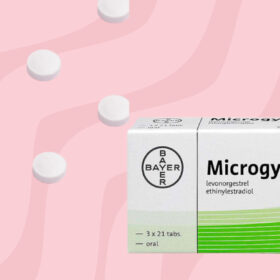
| 5 | Ethinylestradiol | Medium | Levonorgestrel | Androgenic | Levest, Microgynon 30/75, Microgynon ED, Ovranette, Rigevidon, Maexini, Ambelina, Elevin |
| 6 | Ethinylestradiol | Medium | Desogestrel | Less androgenic | Gedarel 30/50, Marvelon, Cimizt |
| 7 | Ethinylestradiol | Medium | Gestodene | Less androgenic | Femodene, Femodene ED, Katya 30/75, Millinette 30/75 |
| 8 | Ethinylestradiol | Medium | Drospirenone | Anti-androgenic | Yasmin, Lucette, Dretine, Yacella |
| 9 | Ethinylestradiol | High | Norethisterone (1mg) | Androgenic | Norimin |
| 10 | Ethinylestradiol | High | Norethisterone (0.5mg) | Androgenic | Brevinor |
| 11 | Ethinylestradiol | High | Levonorgestrel | Androgenic | Logynon |
| 12 | Ethinylestradiol | High | Norgestimate | Less androgenic | Cilest, Lizinna, Cilique |
| 13 | Ethinylestradiol | High | Co-cyprindiol | Anti-androgenic | Dianette |
| 14 | Mestranol | Can’t compare | Norethisterone | Androgenic | Norinyl-1 |
| 15 | Estradiol valerate | Can’t compare | Dienogest | Unknown | Qlaira |
| 16 | Estradiol hemihydrate | Can’t compare | Nomegestrol | Anti-androgenic | Zoely |
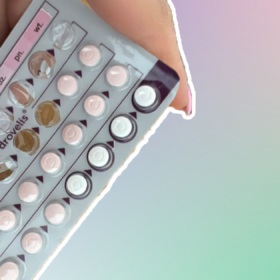
| 17 | Estetrol monohydrate | Can’t compare | Drospirenone | Anti-androgenic | Drovelis |
What does low, medium and high oestrogen mean?
Traditionally every pill used the same type of synthetic oestrogen (ethinylestradiol) in varying concentrations. However, some newer pills contain a different type of oestrogen – the change in side effects from this are still being investigated.
Your healthcare provider can change your pill brand according to the concentration of ethinylestradiol oestrogen. Low oestrogen doses are 15 to 20mcg, medium oestrogen doses are 30mcg or high oestrogen doses are 35mcg. Different side effects can be improved by changing the dose.
For example, a pill with a higher concentration of ethinylestradiol may help control bleeding more effectively and stop breakthrough bleeding. However, if you experience symptoms including bloating, breast pain, nausea, headaches or low libido, reducing oestrogen content using another brand may help. You can read more about this in our guide on what ethinylestradiol is and how it works.
Which pills have natural oestrogen?
Qlaira, Zoely and Drovelis are pill brands which contain oestrogen which is naturally formed in our body. These are not synthetic oestrogens. Some women prefer these options as natural body-identical can improve their side effects. These pill brands can be used for perimenopause symptoms.
What does progestogen androgenicity mean?
The progestogen part of the combined pill can also cause an individual’s side effects to vary. Progestogen (or progestins) can be classed as “more androgenic” or “less/anti androgenic”. This means they have a greater or lesser effect on the male hormone (testosterone) receptors within the body.
More androgenic progestogens can be associated with side effects such as acne and mood change. Anti-androgenic progestogens in combined pills may reduce libido and have a higher risk of blood clots. Check out our guide to androgens to learn more about this.
What’s the difference between pill brands in the same group?
Brands of pill in the same group have the same hormonal ingredients and should theoretically be no different. However, the brands may contain different non-hormonal ingredients called excipients. Some users find the different excipients cause side effects. For example, switching from Rigevidon to Microgynon might make you feel differently, even though they have the same hormonal ingredients.
However, you could also switch between brands in different groups and not notice any change in side effects, whereas others may be sensitive to the level of oestrogen or the type of progestogen. This is why contraception is so individual!
Gedarel vs Microgynon
| Brand | Oestrogen | Oestrogen level | Progestogen | Androgenicity |
|---|---|---|---|---|
| Gedarel 20/150 | Ethinylestradiol | Low | Desogestrel | Less androgenic |
| Gedarel 30/150 | Ethinylestradiol | Medium | Desogestrel | Less androgenic |
| Microgynon | Ethinylestradiol | Medium | Levonorgestrel | Androgenic |
When it comes to side effects, 65% Lowdown reviewers reported tender breasts when using Gedarel 20/150, compared to 60% on Gedarel 30/150, and 47% on Microgynon. (Data from April 2026)
Our data also shows that Gedarel 30/150 caused 51% of our reviewers to experience vaginal dryness, whereas only 46% of those using Gedarel 20/150, and 36% using Microgynon experienced this. (Data taken from April 2026)
Brevinor vs Microgynon
| Brand | Oestrogen | Oestrogen level | Progestogen | Androgenicity |
|---|---|---|---|---|
| Brevinor | Ethinylestradiol | High oestrogen | Norethisterone | Androgenic |
| Microgynon | Ethinylestradiol | Medium oestrogen | Levonorgestrel | Androgenic |
Lowdown reviewers using the Brevinor combined pill have experienced higher rates of boob-related side effects. Brevinor users reported 71% enlarged breasts, and 61% tender breasts, compared to 47% enlarged breasts and 42% tender breasts by those on Microgynon. (Data taken April 2026)
Only 29% of people taking Brevinor experienced lighter periods, compared to 53% of people taking Microgynon. (Data taken Apirl 2026)
Femodette vs Millinette
| Brand | Oestrogen | Oestrogen level | Progestogen | Androcentricity |
|---|---|---|---|---|
| Femodette | Ethinylestradiol | Low oestrogen | Gestodene | Less androgenic |
| Millinette 20/75 | Ethinylestradiol | Low oestrogen | Gestodene | Less androgenic |
| Millinette 30/75 | Ethinylestradiol | Medium oestrogen | Gestodene | Less androgenic |
55% of Lowdown reviewers who have used Millinette 30/75 have reported experiencing increased vaginal discharge, compared to 53% of those on Millinette 20/75 and 39% of Femodette users – so this could potentially be a good option for those who tend to experience vaginal dryness! (Data taken April 2026)
In addition to this, 41% of people using Millinette 20/75 experienced a decrease in their sex drive, whereas 53% of Lowdown reviewers using Femodette have said they lost theirs. (Data taken Apriol 2026)
What else Lowdown reviewers say?
Want to see the differences between even more brands of pill? You can compare any two brands side-by-side using our contraception comparison tool!
The Lowdown’s progestogen-only pill groups
The progestogen-only pill is a little bit simpler than the combined pill. Here we’ve grouped the progestogen-only pills according to the type of progestogen it contains.
| Group | Progestogen type | Progestogen androgenicity | Brand names |
|---|---|---|---|
| 1 | Desogestrel | Less androgenic | Cerazette, Cerelle, Zelleta, Desogestrel, Aizea, Desomono, Desorex, Feonolla, Hana, Lovima |
| 2 | Norethisterone | Androgenic | Micronor, Noriday |
| 3 | Levonorgestrel | Androgenic | Norgeston |
| 4 | Drospirenone | Anti-androgenic | Slynd |
There’s a key difference between these groups…
Group 1 mini pills
Group 1 pills contain desogestrel. Desogestrel progestogen-only pills must be taken within 12 hours of the same time every day.
Group 1 pills include mini pills Hana, Cerazette, Cerelle, Zelleta, Desogestrel, Aizea, Desomono, Desorex, Feonolla and Lovima.
Group 2 and 3 mini pills
Group 2 and 3 pills are known as ‘traditional’ progestogen-only pills. They contain either norethisterone or levonorgestrel and must be taken within 3 hours of the same time every day. If taken outside of this time window this counts as a ‘missed pill’.
Group 4 mini pills
This pill contains 4mg of drospirenone, another type of synthetic progestogen, and is taken as 24 daily active pills followed by four hormone-free placebo pills (then repeat). The green placebo pills can be ignored to take it continuously if you wish to avoid a bleed. Currently the only brand name for this pill is Slynd.
In contrast to the desogestrel and traditional pills, the drospirenone pill is considered missed if you’re more than 24 hours late taking it. This means more than 48 hours after the last pill was taken or more than 24 hours after a new packet should have been started after 4 days of sugar pills (the hormone free interval).
Unscheduled and irregular bleeding is a common side effect of all types of mini pill. If you switch between groups of progestogen only pills you may experience different bleeding patterns.
Whilst we’re not sure why this is, it is useful to know you could try switching to another group if the bleeding you’re experiencing on one type of pill is problematic after trying it for 3 months.
In summary…
Whilst this may make contraception confusing for many, it is actually an advantage – having so many brands allows you to try alternatives if you don’t get on with one.
It is possible to switch brands, depending on the types and concentrations of the hormones they contain, and ultimately find what’s best for you! See more information on switching your contraceptive here.

The Lowdown
We are a real-word evidence platform for women’s health that’s visited by almost 2 million women every year. We enable women to review and research their health conditions, symptoms and medications so they can make more informed decisions. Our approach is unique; we provide credible, scientific information alongside reviews from our community of women. We believe that listening to women’s experiences of healthcare is crucial to improving it. Any articles written by "The Lowdown" are written by a range of Lowdown team members and medical professionals.
Our medical review process

This article has been medically reviewed for factual and up to date information by a Lowdown doctor.