Female chin hair & how to remove
What's the lowdown?
Female chin hair is common
It can signal hormonal shifts such as perimenopause, menopause or PCOS
Chin hair removal can be temporary, such as waxing or tweezing, or long-term, like laser hair reduction
Make sure to see a doctor if you experience sudden, excessive hair growth
Anyone else super self-conscious over the random collection of hairs growing on their chin? 🙋♀️
Well some sources estimate that excess facial hair affects around 5 to 10% of women1, including chin and upper lip hair. In Western populations specifically, about 5 to 10% of women have hirsutism (which is the medical definition for excess hair growth in male pattern areas). So you’re not the only one.
As someone who knows how it feels to be the only person in the world with excess facial hair – or at least it sometimes feels that way, we’ll discuss why female chin hair occurs and the best best chin hair removal techniques.
What is female chin hair?
Female chin hair refers to the growth of thick, often dark black, coarse hair (terminal hair) that develops on a woman’s chin or jawline. Women can develop chin hair because of natural ageing, underlying hormonal changes or family history. And guess what? It’s normal.
Excess facial hair growth is stimulated from higher levels of male hormones called androgens. Androgens are a group of sex hormones usually associated with men and the main androgen involved in this case is testosterone. If there’s a high level of testosterone, or other androgenic hormones, in women it can cause a hormonal imbalance, which in turn can lead to chin hair.
What causes female chin hair?
Like always, there are many possible causes why women get chin hairs. Here are a few2:
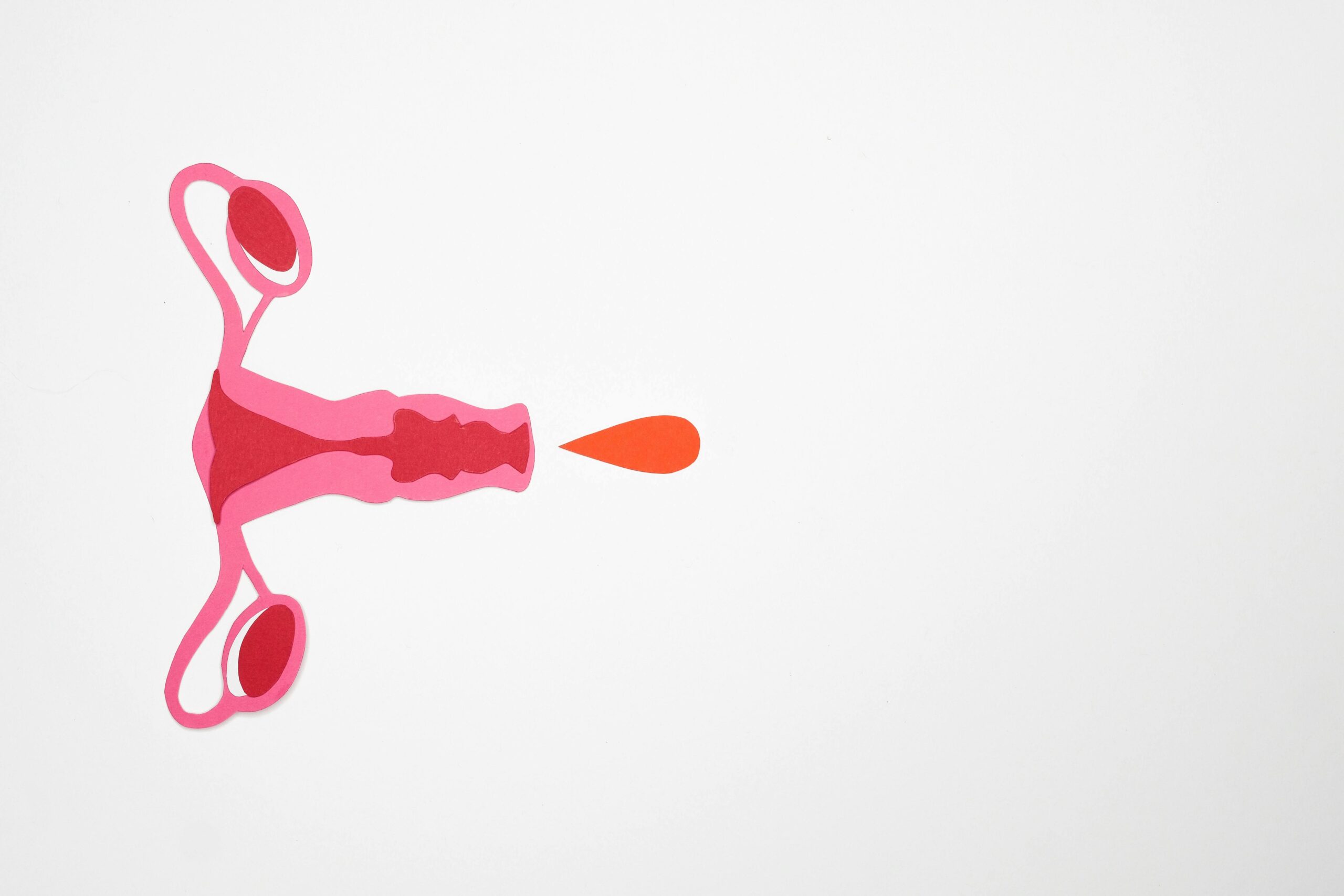
Polycystic ovary syndrome (PCOS)
PCOS is a complex condition where androgens, which are produced by the ovaries, can be increased and cause excessive hair growth3. Softer vellus hairs (the fine hairs found over your body) can change into thicker, darker terminal hairs, and once changed the hairs won’t change back. Along with a shift in hormones, other PCOS signs to look out for include; irregular periods, weight-gain and struggling to get pregnant.
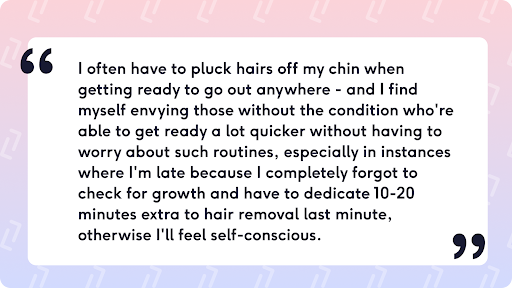
Here’s what one Lowdown user shared about their experience with PCOS and chin hair growth:
Cushing’s syndrome
Cushing’s syndrome is a medical condition caused by exposure to high levels of cortisol. Cushing’s syndrome develops when the adrenal glands produce too much cortisol. High levels of cortisol can increase the amount of androgens in a woman’s body which triggers hair growth.
The syndrome can also cause symptoms such as; weight gain, especially in the face, excess facial or chin hair, acne and irregular or absent periods, which are all common symptoms of PCOS too. It is important to see your doctor to diagnose between Cushing’s syndrome and PCOS, which is done through hormonal tests.
Congenital Adrenal Hyperplasia (CAH)
Congenital adrenal hyperplasia is a condition you’re born with, where your adrenal glands cannot produce enough cortisol and leads to an overproduction of androgens instead. This not only can cause excess facial hair, but also the deepening of your voice, fertility issues and irregular periods.
Congenital adrenal hyperplasia is a lifelong condition which should be monitored by your doctor, and could include hormone replacement in order to maintain a good quality of life.
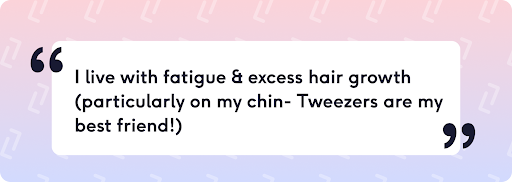
It is also important to note that hirsutism can develop without any cause, which can be really frustrating to understand. However, that doesn’t make treatment impossible.
Female chin hair removal
So let’s find out how to get rid of, and if it’s even possible to get rid of, chin hair…
Let’s get one thing clear first of all… You don’t have to remove your chin hair – or any other body hair for that matter – unless you actually want to. So if you decide to do something, do it for you and no one else. ❤️
Laser chin hair removal
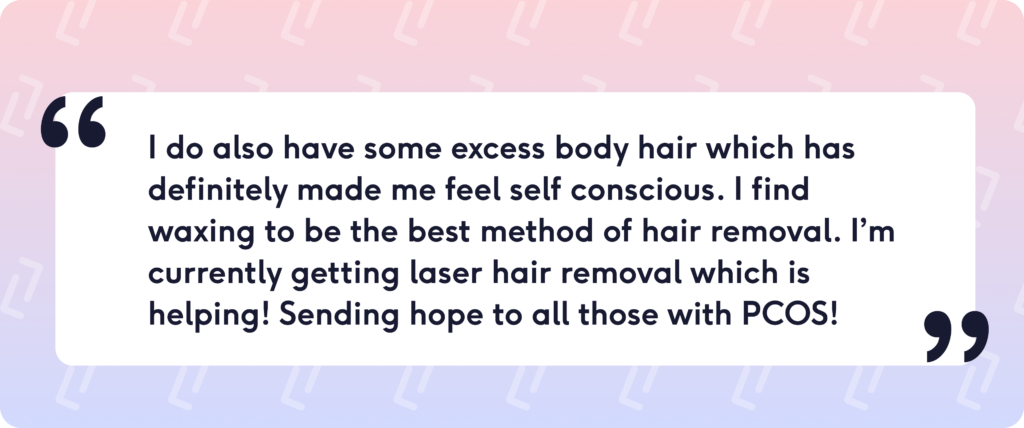
Laser chin hair removal uses light to target dark hair and unfortunately works on dark hair only. This is not an 100% removal method, but can cause slower and finer regrowth of hairs or even significant reduction4.
You can even do laser hair removal from the comfort of your own home now, with gadgets such as Lumi. These modern lasers are safe to use at home and are ideal for people who have sensitive skin.
Key considerations for laser hair removal
- Shave the area the day before
- Avoid sun tanning for several weeks prior
- Follow all safety precautions given by laser hair removal companies
And remember that laser hair removal takes patience!
Electrolysis for chin hair removal
This FDA-approved method works by disrupting the hair growth with heat and chemical energy. One benefit is that it usually works better than laser hair removal, however there is the possibility of scarring.
Usually a doctor is needed to assess the hair growth and provide the best course of treatment going forwards. An effective electrical current is used to destroy the hair and it works on all hair types. It is the only known way to permanently remove hair.
Key considerations for electrolysis
- Expect 15-30 sessions – it’s not an easy treatment option
- Numbing cream can help as it can cause mild stinging
- The pain from this method can sometimes be more noticeable on the chin due to bones in close proximity
- Avoid exfoliating beforehand
Anti-androgen medications for chin hair removal
Anti-androgen medications are a temporary option. A prescription is required to take anti-androgen medication, but they can be purchased through an online pharmacy.
Unfortunately, they can take months to work, require constant use and require the use of birth control alongside it – usually the combined pill2. Some medications may not be suitable for pregnant women to take, which is an important consideration3.
Names to look out for include; Spironolactone and Finasteride.
Key considerations for anti-androgen medications5
- It could take at least 6 months to see significant improvement
- Contraception is essential to take with these medications
- Hair growth will return to how it originally was once you stop treatment
Tweezers for chin hair removal
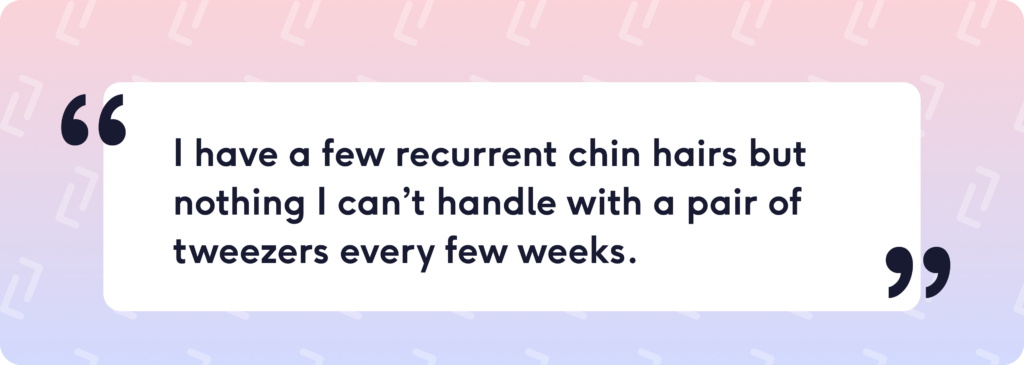
Perhaps the easiest way to remove chin hair is via tweezers, but should you?
Slanted and pointy tweezers are a good option, in order to really grip the hair and remove the root too. Tweezers are also ideal for ingrown chin hairs because of its sharp ends.
Key considerations for using tweezers6
- A magnifying mirror can help
- You can reduce pain by holding the skin taut when you pluck
- If no one’s taught you before now… Pull in the direction of hair growth!
- Clean tweezers to prevent infection
And on that note!!
It’s completely okay if you have chin hair, or any kind of facial or body hair, and it’s also completely okay if you don’t feel like dealing with it! A lot of women have it for totally normal reasons – sometimes even uncontrollable reasons – but at the end of the day we’re just human.
In all honesty, I used to feel really self-conscious about my chin hair. I was so certain that everyone was looking at it all the time and then it became something that I had to manage and hide. I would even go as far as saying it made me feel unfeminine at times. However, over time, I’ve realised just how much energy I was wasting by stressing out over something that’s actually pretty normal. A lot of women deal with this, we just don’t talk about it! So here’s to women with chin hairs 🍻!

Ellie Jones
Social Media Lead, The Lowdown
Ellie started as a social media intern for The Lowdown during her gap-year and now works as their social media and marketing lead. She has a strong passion for women's health including; how women's health is impacting our environment and women's rights across the world.
Our medical review process

This article has been medically reviewed for factual and up to date information by a Lowdown doctor.