
PMOS & Fertility: Can You Get Pregnant with PMOS?
In this article
What's the lowdown?
PMOS can affect ovulation making it harder to get pregnant
Lifestyle changes have a big impact on your fertility
If you are struggling to conceive with PMOS, you can often be referred to get help earlier
Fertility treatment for PMOS is successful
This post contains Amazon affiliate links for supplements our doctors recommend – we earn a small commission too ❤️
What is PMOS?
Polyendocrine metabolic ovarian syndrome (PMOS) is the new name for PCOS. It is a common problem which causes a hormonal imbalance in around 10% of people with ovaries1. PMOS typically causes symptoms of irregular or absent periods alongside acne and unwanted hair growth, many other physical symptoms have been reported – from bloating, to fatigue and snoring. You can read more about how PMOS affects The Lowdown community differently through their shared experiences.
How does PMOS affect fertility?
PMOS affects the ability to ovulate (release an egg) which is crucial for pregnancy. Ovulation happens around 14 days before your period, and therefore, regular periods are a good indicator of ovulation. With PMOS, the hormonal imbalance means ovulation often doesn’t happen, which is called anovulation. The mechanism of anovulation is not fully understood. In couples who are found to have anovulation at fertility clinics, 70-80% of them are diagnosed with PMOS2.
Irregular or absent periods are a sign that ovulation might not be happening regularly, or at all. And it also makes it reeeaaally difficult to work out your fertile days to have sex if your menstrual cycle isn’t regular.
To sum up, PMOS impacts fertility as ovulation may be unpredictable and sporadic which reduces opportunities for the sperm to meet an egg, which, as we know, is needed for pregnancy to happen.
How can I improve my fertility with PMOS?
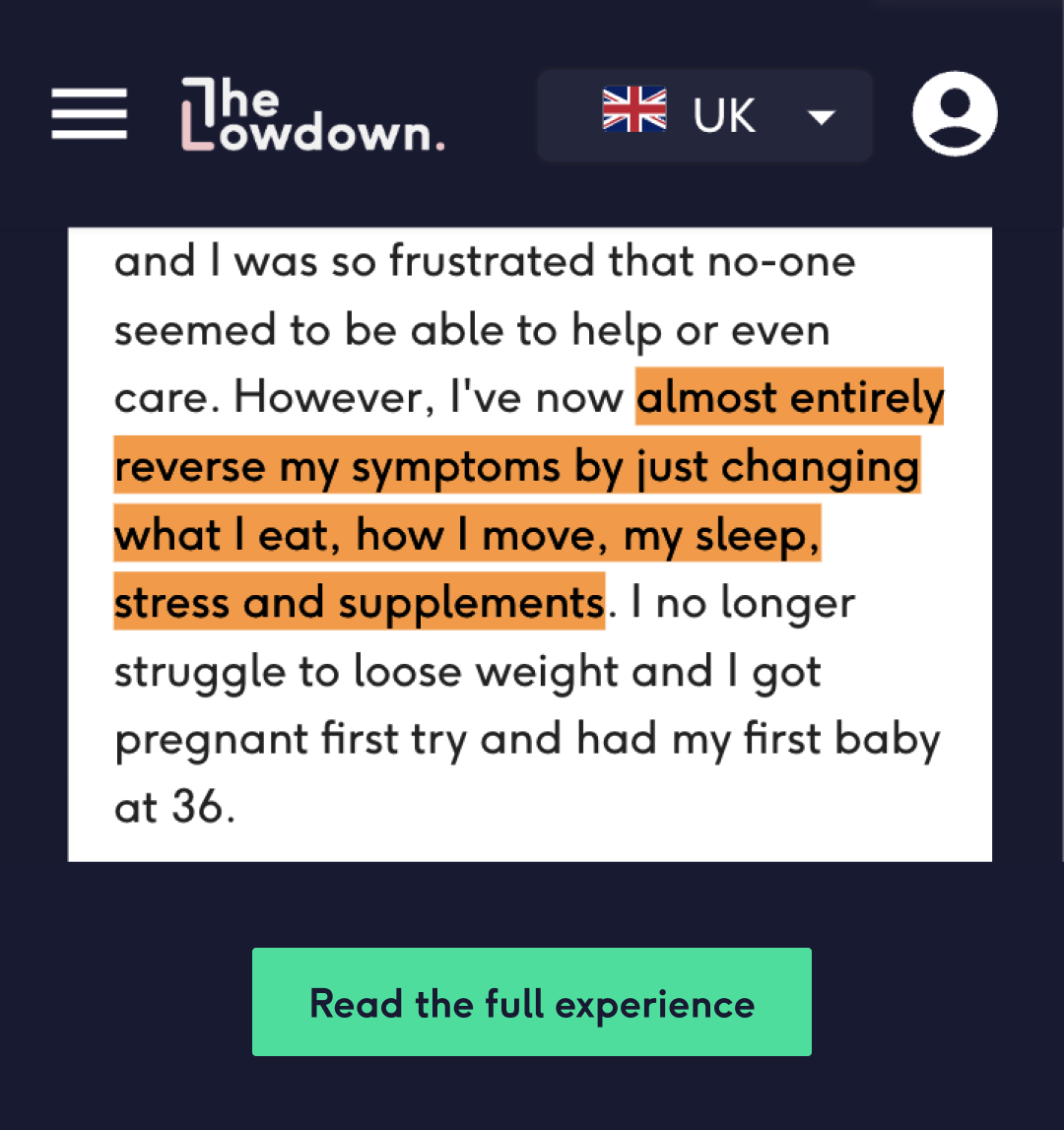
If you have PMOS, you can improve your fertility in similar ways to people without PMOS. Lifestyle changes play a huge role in PMOS symptoms, these are often things you can do yourself without involvement from a healthcare professional. Lifestyle changes can also be magical for your fertility, as this Lowdown user found:
Important lifestyle changes to make to improve fertility include:
- Stopping smoking
- Reducing your caffeine intake
- Reducing how much alcohol you drink
- Exercise regularly, but not to excess
- Aiming for a healthy weight
Weight loss is often a tricky subject for people with PMOS because the condition itself makes it easy to gain weight and difficult to lose it. Weight stigma is also commonly experienced by PMOS sufferers3 so it’s frustrating that body mass index known as ‘BMI’, which is a poor indicator of individual health, is used as a criteria for fertility treatment. There is also no evidence that a particular diet (such as keto, calorie counting, Slimming World etc) or type of exercise (high intensity vs. low intensity) is better for weight loss if you have PMOS3.
It’s best to find what works for you as an individual, which may be with the support of a dietitian or nutritionist specialising in PMOS. Losing just 5% of your body weight can have a really positive impact on your fertility.
You can also take our fertility quiz to see how you can improve your fertility, whether you’re trying right now, planning for the future or just curious!
If you want to have a personalised discussion about the treatments and lifestyle changes for PMOS that might work for you, speak to one of our women’s health doctors.
Which supplements can improve fertility in PMOS?
Anyone who is trying to conceive should be taking vitamin D and folic acid supplements to promote a healthy pregnancy, which are pretty cheap to pick up from many supermarkets and pharmacies.
A popular supplement called myo-inositol has been shown to improve ovulation in some people with PMOS4. You can purchase myo-inositol on Amazon (check out the reviews!)
If you choose to take myo-inositol, another supplement called alpha-lactalbumin can help your body absorb more of the myo-inositol, possibly making it more effective5. However, these supplements can be expensive, and you should always talk to your healthcare provider before taking them if you are using any other medications.
How long will it take to get pregnant with PMOS?
The time it takes to get pregnant with PMOS varies between individuals. We’d love to give an answer, but it’s really very difficult to predict because your fertility and when you conceive is down to lots of different factors.
It’s normal for 80% of couples with no fertility problems to take up to 12 months to conceive.
46% of couples with mild fertility problems and 11% of couples with severe fertility problems will get pregnant naturally within 12 months6.
What if I’m not getting pregnant with PMOS?
If you’re not getting pregnant, remember, this could be due to other problems including in your partner, rather than your PMOS. It can also take a few months for your cycle to return to what is normal for you after coming off contraception, which can be a reason for the delay.
If you are having less than 3 periods a year, then you may be able to ask your doctor for referral for fertility support before or when you start trying to conceive. You should also be referred for fertility support after 6 months of trying to conceive if you have PMOS.
In PMOS, lack of ovulation is often the cause of fertility problems. Fertility treatment can induce ovulation through medications such as:
- Clomid which will help between 20 to 50% of couples have a baby successfully with treatment7,8,9.
- Metformin. One study suggests up to 8% of couples will have a baby with Metformin alone, but this can be used in combination with other medications7,8.
- Letrozole, 28% of couples will go on to have a baby with treatment8.
- Gonadotrophin hormone injections with which between 40 to 60% of couples will successfully have a baby9,10.
Further fertility treatment includes in-vitro fertilisation or a surgical procedure called laparoscopic drilling which is successful in around 50-60%11. There are plenty of options to help and treatment for PMOS associated fertility problems is often really successful. In fact, IVF is more successful for older women with PMOS than it is for older women without PMOS.
Where can I get support for PMOS and fertility?
PMOS is a really variable condition which affects some people more than others. We often hear from people that they feel alone and frustrated about the lack of insight from healthcare professionals, alongside limited research for healthcare professionals to base treatment on. That’s why we have our team of women’s health GPs who can listen and provide guidance to manage both symptoms and fertility concerns.
If PMOS affects your fertility, we know it can be incredibly emotionally draining. One Lowdown reviewer said:
This is why The Lowdown PMOS community is a great place to find others just like you, who you can connect with for support and guidance. Check out our PMOS platform and comment on other posts to ask questions, share your own experience to help others.

Dr Fran Yarlett
Medical Director, The Lowdown
Dr Fran is Medical Director at The Lowdown and works as a GP in Sheffield with a special interest in complex medical patients and women’s health.
Our medical review process

This article has been medically reviewed for factual and up to date information by a Lowdown doctor.